
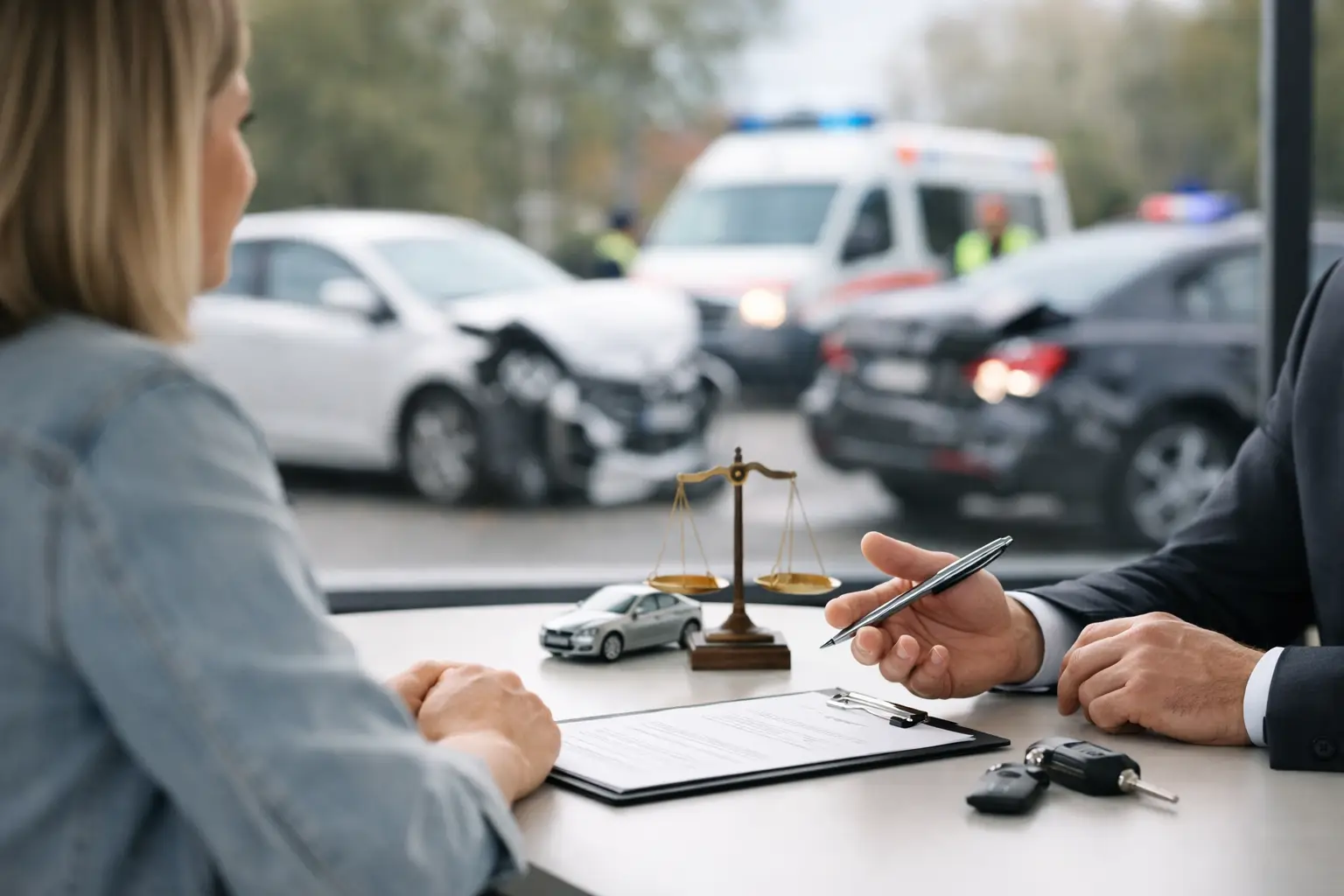
A crash can be over in seconds, yet leave you paying repair invoices, arranging replacement transport and chasing answers for months. If another driver caused the collision, not at fault accident compensation is about putting you back in the financial position you would have been in if the accident had not happened. It is not a favour from the other driver’s insurer. It is a recovery process that requires evidence, accurate calculations and a firm response when reasonable losses are disputed.
For private owners, that may mean getting the car repaired properly without being left out of pocket. For repairers, hire-car providers and fleet operators, it can mean recovering invoices that are delayed, reduced or rejected despite clear liability. The right approach depends on the accident, the available evidence and the losses involved, but waiting for an insurer to decide what is fair is rarely a complete strategy.
What not at fault accident compensation can cover
The starting point is simple: the person responsible for the accident should meet losses that were reasonably caused by it. In a motor vehicle matter, the repair bill is often the most obvious loss, but it is not necessarily the only one.
A properly prepared claim may include the reasonable cost of repairing the vehicle, assessment or quoting fees, towing and storage where necessary, and the reasonable cost of a comparable replacement vehicle while yours is unavailable. If the vehicle is a total loss, the dispute may instead centre on its pre-accident value, salvage value and associated costs.
For businesses, the consequences can extend further. A damaged work vehicle may interrupt scheduled jobs, deliveries or customer commitments. A fleet operator may need replacement vehicles to keep staff mobile. A repair business may have completed authorised work only to face an insurer challenging labour rates, parts pricing or the scope of repairs. Each item needs to be tied to the accident and supported by records.
Not every expense will be recoverable merely because it followed the crash. The key questions are whether the loss was caused by the other driver’s conduct, whether it was reasonable, and whether you took sensible steps to limit unnecessary costs. For example, a like-for-like hire vehicle may be justified where you genuinely need a vehicle of that type. Keeping a premium vehicle for longer than necessary can create an avoidable dispute.
Evidence decides more than the accident story
Liability disputes often begin with two conflicting versions of a short event. Strong evidence reduces the room for an at-fault driver or insurer to deny responsibility or argue that you contributed to the collision.
Photographs of vehicle positions, damage, road markings, traffic controls and the surrounding area should be taken as soon as it is safe to do so. Keep the other driver’s details, witness contact information, dash-cam footage, police event numbers where applicable, and all communications about the accident. If there is CCTV nearby, act quickly. Footage may be overwritten within days.
The financial side needs the same discipline. Retain repair authorities, tax invoices, assessor reports, vehicle valuation material, tow and storage invoices, hire agreements, and proof of payment. Businesses should also preserve job schedules, fleet records and correspondence showing why a replacement vehicle was required. A claim is stronger when it explains not only what was spent, but why the expense was necessary.
You should also be careful with early admissions. Being polite at the scene is one thing; accepting blame before the facts are clear is another. Give an accurate account, avoid speculation and do not agree to a settlement figure before you know the full extent of the loss.
The practical path to recovering your losses
The recovery process usually starts by identifying the liable party and their insurer, then issuing a clear demand supported by evidence. The demand should set out how the accident occurred, why the other driver is responsible, each head of loss claimed and the documents relied on.
An insurer may accept liability quickly and pay the claim. In other matters, it may ask for more documents, dispute the repair methodology, challenge the need for a hire car or offer less than the amount claimed. A low offer is not automatically the final word. It needs to be assessed against the evidence, the applicable legal principles and the realistic cost of pursuing the balance.
Direct, documented negotiation is often the most efficient way to resolve a claim. The aim is not to prolong correspondence. It is to remove unsupported objections, test genuine areas of disagreement and obtain a favourable settlement without sacrificing a valid part of the claim.
Where negotiations fail, formal recovery action may be necessary. Court proceedings should be a commercial decision, not a reflex. The amount in dispute, evidence, likely legal costs, jurisdiction and the prospects of recovery all matter. A well-prepared claim often improves settlement prospects before a hearing is required, but litigation remains an important option where an insurer or at-fault party refuses to pay what is properly owed.
Common disputes that leave claimants out of pocket
Insurers do not always dispute liability outright. Sometimes they accept that their insured caused the accident but contest the amount. This is where claimants can lose money if they accept broad statements without asking for a proper basis.
Repair disputes can concern labour rates, replacement parts, paint and materials, or whether particular damage was caused by the collision. The answer should come from reliable repair and assessment evidence, not a generic assertion that the invoice is too high. Repairers should ensure their documentation clearly records the damage, repair method, parts used and reason for any supplementary work.
Hire-car disputes commonly focus on necessity, vehicle category, daily rate and duration. A claimant does not need to accept an unsuitable replacement simply to reduce the insurer’s cost. Equally, the hire period must be reasonable and should be supported by repair timing, parts availability and collection records.
Delays can create another problem. Storage, hire and business interruption losses may grow while parties argue about liability. Early action helps prevent a straightforward claim from becoming unnecessarily expensive. It also gives you more control over the evidence while it is still available.
Not at fault accident compensation when you have insurance
Having comprehensive insurance can make repairs easier to arrange, but it does not always remove the need to consider recovery. Your policy excess, uninsured losses, choice of repairer, hire arrangements and insurer decisions may still affect your position. The policy wording and facts of the accident matter.
In some cases, making a claim under your own policy is the quickest way to get the vehicle moving. Your insurer may then pursue the at-fault party. In others, a direct third-party recovery better protects your preferred repair arrangements or allows the full range of losses to be assessed. There is no single route that suits every accident.
Before signing releases or accepting payment, check exactly what the amount covers. A settlement that resolves ‘all claims’ may prevent you from seeking additional losses later. If repair costs, hire charges or liability are still unresolved, obtain advice before closing the matter.
When specialist recovery support makes a difference
A straightforward claim can become difficult when liability is denied, evidence is incomplete, invoices are challenged or the at-fault insurer stops responding. Commercial operators can face the same argument repeatedly across multiple matters, consuming time that should be spent running the business.
Specialist recovery support brings the claim into focus: liability is analysed, losses are calculated, documents are organised and the insurer is required to respond to the actual evidence. Titan Legal acts for not-at-fault vehicle owners and businesses to pursue repair costs, like-for-like hire charges and related accident losses through negotiation and, where needed, court proceedings.
Prompt action protects more than your vehicle. It preserves the evidence, limits avoidable costs and makes it harder for a valid claim to be pushed aside. If you were not responsible for the crash, keep your records, question unexplained reductions and insist on a recovery that reflects the loss you have actually suffered.
