
A crash can leave you with a damaged vehicle, a disrupted business and repair or hire car invoices arriving before the other driver accepts responsibility. Knowing how to prove liability after car accident is the step that turns your account of what happened into a recovery claim the at-fault driver or insurer must properly address.
Liability is not decided by who speaks most confidently at the roadside. It is decided by the available evidence, the road rules and the sequence of events. Acting early gives you the best chance of protecting that evidence and recovering the losses you should not have to carry.
What proving liability actually means
In practical terms, proving liability means showing that another road user failed to take reasonable care or breached a road rule, and that their actions caused your loss. In many matters, this comes down to a clear question: who had the right of way, and what should each driver reasonably have done to avoid the collision?
A rear-end collision, a vehicle turning across traffic, a failure to give way at an intersection or a lane-change impact may appear straightforward. But insurers can still dispute the facts, argue that you contributed to the accident or question whether all claimed losses flowed from it.
That is why a good recovery claim does more than state that you were not at fault. It presents reliable material that supports the position and links the accident to the repair costs, assessment fees, reasonable hire car charges and other losses being claimed.
Start collecting evidence at the accident scene
If it is safe to do so, gather information before vehicles are moved and before the road is cleared. The moments after an accident are often when the clearest physical evidence is available.
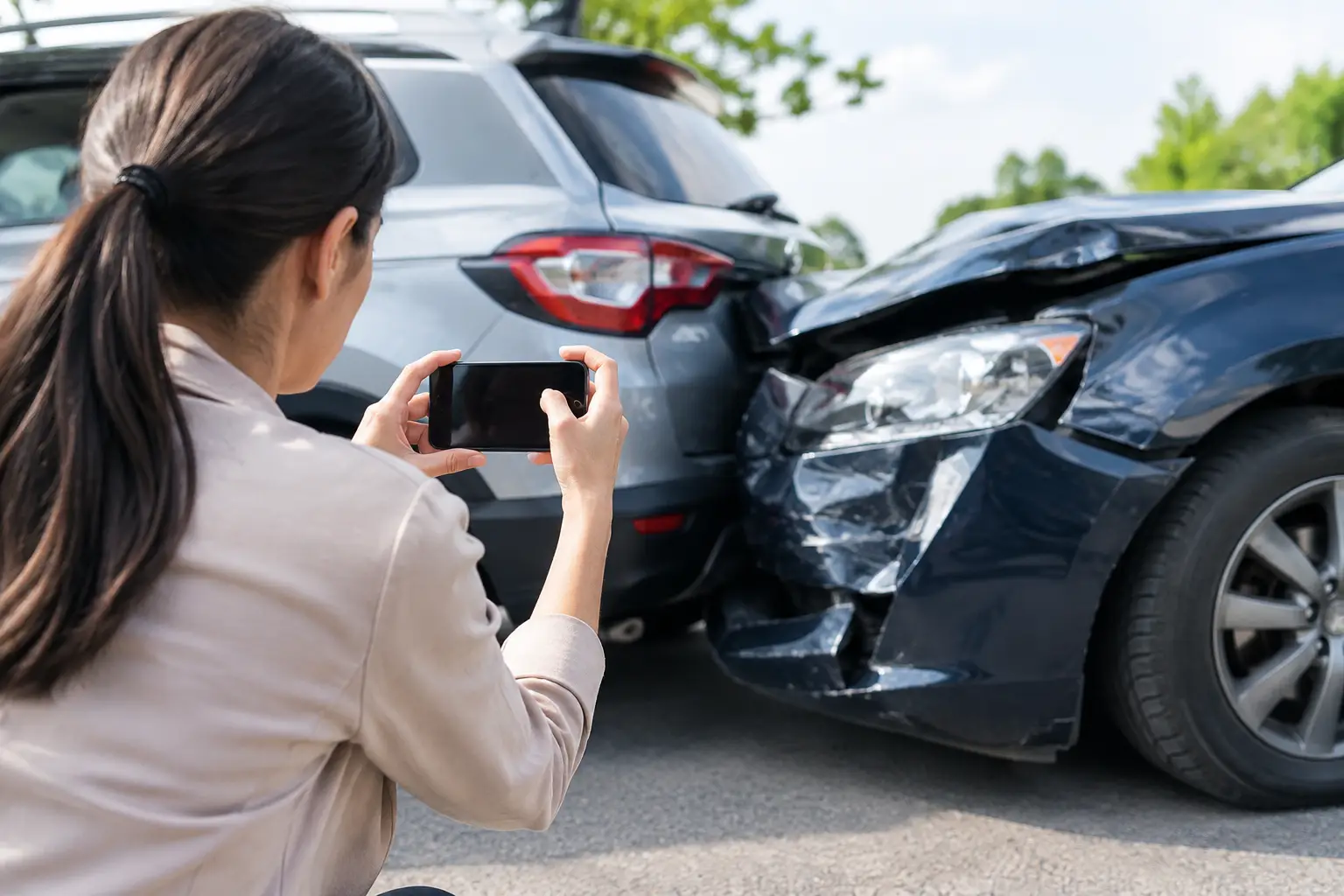
Take photographs and video from several angles. Capture the position of the vehicles, damage to each vehicle, skid marks, debris, lane markings, traffic lights, signs, weather conditions and any obstruction to visibility. Photograph the wider road layout as well as close-ups of the damage. A single photo of a dent rarely explains how the accident occurred. A series showing vehicle positions and the intersection often does.
Exchange details with the other driver, including their full name, address, mobile number, registration, insurer and policy details where available. Do not rely on a verbal promise that they will “sort it out”. Record the information yourself and photograph their licence or registration documents if they agree.
If there are witnesses, ask for their names and contact details. An independent witness can be particularly valuable where each driver gives a different version of events. Ask what they saw rather than suggesting an answer. A brief contemporaneous note, such as “saw blue ute enter roundabout without giving way”, may later carry more weight than a recollection months after the event.
Where police attend, obtain the event number and make a note of the officers’ names if possible. A police report may assist, although police attendance does not automatically determine civil liability.
Preserve the details while they are fresh
Once you are safe, write down your own account as soon as possible. Include the date, time, location, direction of travel, lanes used, speed limits, traffic signals, weather, visibility and the actions of both drivers immediately before impact. Draw a simple diagram if it helps.
Keep this account factual. Statements such as “they came from nowhere” are understandable in the moment but do not explain the mechanics of the crash. Specific details are far more useful: “I was travelling south in the left lane on a green light when the other vehicle turned right across my path.”
Check whether your vehicle, a nearby business or another vehicle may have dashcam footage. Dashcam recordings can be overwritten quickly, so save a copy immediately and retain the original file. Do not edit the footage. If you know a business has external cameras, make a written request for the recording promptly, as many systems delete footage after a short period.
Use the road rules and physical evidence together
The strongest liability position is usually built from more than one source. Your version of events should be tested against objective material: the damage pattern, road layout, photos, dashcam footage, witness accounts and applicable road rules.
For example, damage to the rear of your vehicle may support that another driver failed to stop in time. However, it is not always decisive. The other party may allege you reversed unexpectedly, changed lanes abruptly or stopped without reason. The surrounding evidence matters.
At intersections and roundabouts, photographs of signs, lane arrows and line markings can be critical. In lane-change matters, images showing the impact point on both vehicles may help establish whether a driver moved into an occupied lane. In parking-area accidents, the layout, reversing paths and sightlines can all affect liability.
Do not assume an admission at the roadside will end the issue. The other driver may later give a different account to their insurer. Record any admission accurately, preserve messages and avoid arguing by text or social media. Let the evidence do the work.
Obtain evidence of your losses as well
Proving fault is only half the recovery process. You must also substantiate the amount you are seeking to recover.
Keep the repair quote, tax invoice, assessor’s report, towing invoice, storage charges and receipts for any related expenses. If your vehicle cannot be used, retain documentation showing why a replacement vehicle was reasonably required and the cost of the hire. For businesses and fleet operators, this may include booking records, vehicle allocation records or evidence that the damaged vehicle was required for day-to-day operations.
A like-for-like hire vehicle can be reasonable where it matches your genuine transport or commercial needs. But the cost, vehicle class and hire period may be scrutinised. The recovery position is stronger when the hire is proportionate, the need is documented and the vehicle is returned when repairs are complete or a reasonable alternative becomes available.
You also have a duty to take reasonable steps to reduce avoidable loss. That does not mean accepting an inadequate repair or going without transport when you genuinely need a vehicle. It means making commercially sensible decisions and keeping records that show why the expense was necessary.
Respond carefully if liability is disputed
An insurer may deny liability, allege contributory negligence or offer to pay only part of your claim. Do not treat a denial as the final word, particularly where it does not properly engage with the evidence.
Ask for the basis of the decision in writing. Is the dispute about how the accident occurred, the interpretation of the road rules, the repair scope, the hourly rate, the necessity of a hire car or the duration of hire? Each issue requires a focused response.
Contributory negligence can reduce a recovery if your own conduct materially contributed to the loss. For instance, a driver may have had the right of way but still face an argument about speed, attention or failing to take reasonable evasive action. These issues are fact-specific. A fair assessment requires more than a broad allegation from the other side.
Be cautious about signing a release or accepting a settlement before you understand the full cost of the accident. Once a matter is settled, it can be difficult or impossible to seek further payment for losses that were not included.
When legal recovery support makes a difference
Some claims resolve quickly when liability is clear and the insurer accepts the repair and hire costs. Others become drawn out because the at-fault party cannot be located, their insurer disputes responsibility, or the claimed losses are challenged line by line.
This is where a recovery-focused legal approach can protect your position. Titan Legal assists not-at-fault vehicle owners, repairers, hire providers and commercial operators by assessing the evidence, calculating recoverable losses, putting forward a clear demand and negotiating directly with insurers. Where a reasonable settlement is not offered, the claim can be advanced through the appropriate legal process.
The goal is not to make the matter more complicated. It is to ensure you are not left out of pocket because another party refuses to accept a properly supported claim.
A practical checklist after a not-at-fault accident
Keep a complete file from the start. It should include:
- photos and video of the scene, vehicles and road conditions;
- the other driver’s contact, registration and insurer details;
- witness details, police event information and dashcam footage;
- your written account of the accident;
- repair assessments, invoices, towing and storage records; and
- hire vehicle documents and proof of any other accident-related expense.
The clearer the file, the harder it is for an insurer to dismiss your claim with a vague denial or an unsupported reduction.
A car accident can interrupt far more than your day. Preserve the evidence, document every reasonable loss and seek help early if fault or costs are challenged. A well-prepared liability case gives you the strongest platform to pursue the outcome you deserve.
