
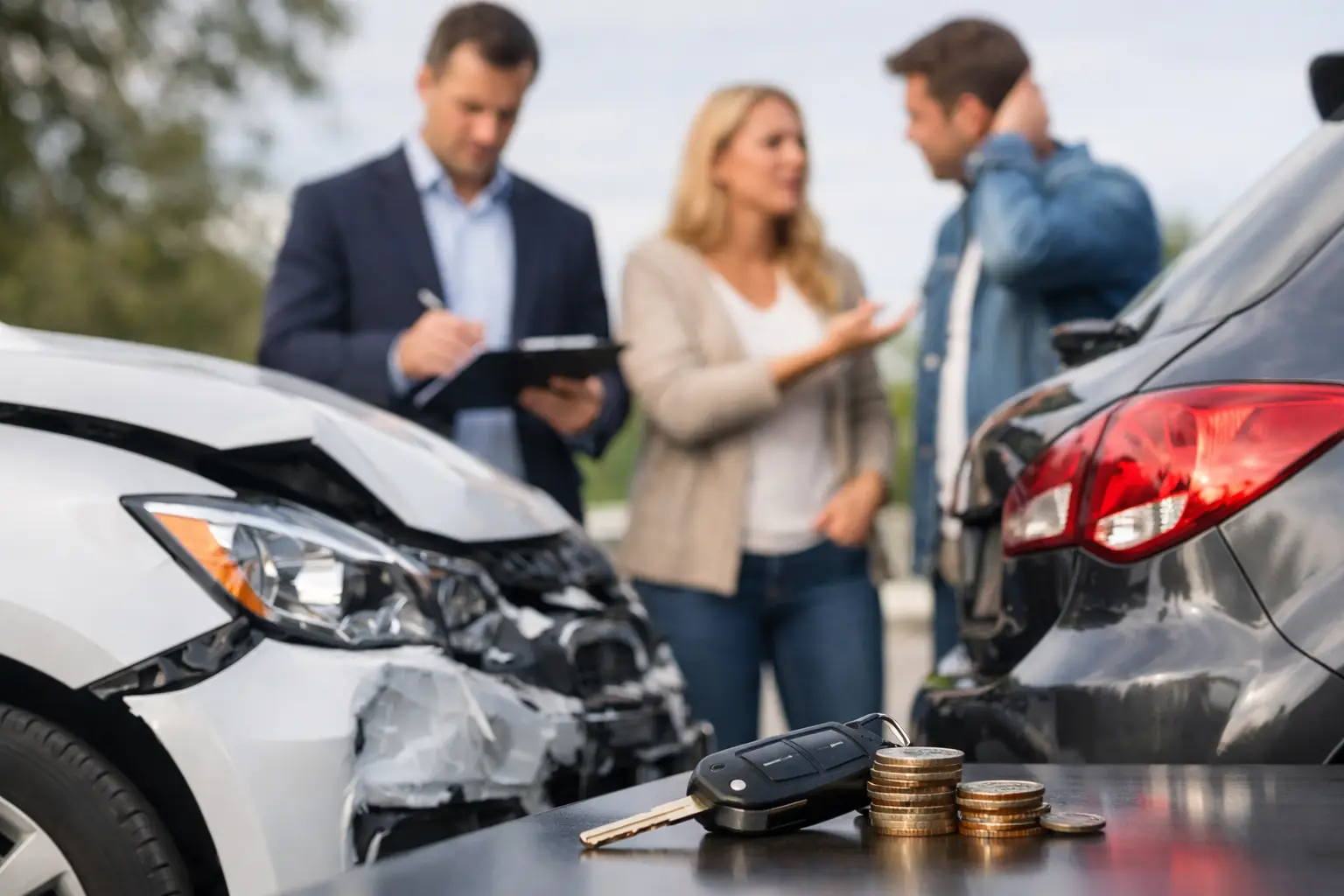
A crash you did not cause can still create an immediate financial concern: will your next insurance renewal cost more? Does a not-at-fault accident affect no-claims bonus? Often, it should not – but the answer depends on your insurer, your policy wording and how the claim is handled. Being legally not at fault does not automatically prevent an insurer from recording a claim or applying its own no-claims bonus rules.
For Australian drivers and businesses, the practical focus is clear. Establish liability early, preserve the evidence, understand whether you are claiming through your own insurer or recovering directly from the at-fault party, and do not accept being left out of pocket for losses that should be recovered.
Does a not-at-fault accident affect no-claims bonus?
A no-claims bonus, sometimes called a no-claims discount or rating protection, is a discount your comprehensive motor insurer may apply based on your claims history. It is not a standard legal entitlement and there is no single Australia-wide rule that applies to every insurer. Each insurer sets the terms of its own policy.
In many cases, a not-at-fault claim will not reduce your no-claims bonus if your insurer can recover its costs from the responsible driver or their insurer. Some policies also preserve the discount where you provide the at-fault driver’s full details and the insurer agrees you were not responsible.
However, a discount may be affected where liability is disputed, the at-fault driver cannot be identified, they are uninsured, or recovery is unsuccessful. It may also be affected if your policy has a particular claims-history rule, even where you believe the other driver caused the collision. This is why the phrase “not-at-fault” is only the starting point. The policy wording and the available evidence matter.
Your renewal premium can also change even if your no-claims bonus stays intact. Insurers price policies using a range of factors, including repair costs, vehicle type, location, theft risk, general market conditions and claims data. A preserved no-claims bonus is valuable, but it is not a guarantee that your premium will remain the same.
What usually determines whether your discount is protected
The first issue is liability. A rear-end collision, a vehicle turning across your path, or a driver failing to give way may appear straightforward, but insurers can still investigate the facts. Dash-cam footage, photographs, independent witness details, police event numbers where relevant, and the location of damage can all help establish what happened.
The second issue is identification. If a driver damages your parked car and leaves without providing details, you may have a genuine not-at-fault loss. Yet your insurer may be unable to pursue anyone for the repair bill. Many policies require the name, registration number and contact details of the responsible driver before they will treat a claim as not at fault for no-claims discount purposes.
The third issue is recovery. If you lodge a claim with your own comprehensive insurer, it may pay for repairs and then seek reimbursement from the at-fault party. Where that recovery succeeds, your excess may be refunded and your no-claims bonus may be preserved under the policy. Until the matter is resolved, though, the insurer may treat aspects of the claim as provisional.
For fleet operators and repair businesses dealing with regular accident claims, accurate records are particularly important. One incomplete intake form or missing photograph can turn a recoverable claim into a prolonged liability dispute. Early documentation supports faster decisions and a stronger recovery position.
Claiming through your insurer versus recovering from the at-fault party
After a not-at-fault accident, you generally have two broad pathways. You may make a claim under your own comprehensive policy, if you have one, or seek recovery from the at-fault driver or their insurer.
Using your own insurer can be convenient. It may arrange assessment and repairs quickly, subject to the policy terms, and then pursue the other party itself. But you should ask clear questions before proceeding: will you need to pay an excess initially, what information is needed to protect your no-claims bonus, and what happens if the insurer cannot recover its costs?
A direct third-party recovery approach focuses on holding the responsible party accountable for the losses their driving caused. Depending on the circumstances, recoverable losses may include reasonable repair costs, assessment fees, towing, storage, like-for-like hire car costs and other losses flowing from the accident. The correct approach depends on the evidence, the value of the loss, the parties involved and the position taken by the at-fault insurer.
This distinction matters because insurance is not the only way to resolve a vehicle damage claim. If another driver caused the loss, their insurer’s delay, denial or low offer should not automatically become your financial burden.
Steps to take at the scene and soon after
Your actions in the first hours after a collision can make a meaningful difference to both an insurance claim and a third-party recovery. If it is safe to do so, take clear photos of every vehicle, the damage, number plates, road markings, traffic signs and the surrounding scene. Exchange names, addresses, mobile numbers, registration details and insurer details with the other driver.
Do not argue about fault at the roadside or make admissions simply to end an uncomfortable conversation. Write down what was said, note the time and location, and identify any witnesses. If there is dash-cam footage, save a copy before it is overwritten. Where police attend, record the event number.
Arrange a repair assessment that properly identifies the damage. A superficial estimate may not account for concealed impact damage, calibration requirements, safety systems or the reasonable cost of returning the vehicle to its pre-accident condition. Businesses should also maintain records of vehicle downtime, replacement vehicle arrangements and invoices connected with the incident.
Then notify your insurer within the time required by your policy, even if you intend to pursue the at-fault party directly. Notification is not necessarily the same as making a full claim, but failing to disclose an incident may create avoidable problems later. Tell the insurer you contend you were not at fault and provide the evidence you have gathered.
Questions to ask your insurer before authorising a claim
The most useful questions are specific. Ask whether the claim will affect your no-claims bonus, whether the position changes if the insurer recovers from the other driver, and whether you must pay an excess before liability is determined. Ask for the answer in writing or keep a clear file note of the conversation.
You should also ask whether your policy includes rating protection. Rating protection can prevent a discount from being reduced after certain claims, but it does not necessarily stop the overall premium increasing. It may also have conditions, limits on the number of claims, or exclusions that apply to particular circumstances.
If the insurer says you are at fault, partly at fault, or unable to establish fault, ask what evidence it relied upon. A liability decision should not be accepted without scrutiny where the facts, photographs, witness accounts or road rules point the other way.
Common situations where the answer is less clear
Multi-vehicle crashes can involve competing versions of events. A driver may have struck your vehicle, but argue that you braked suddenly or changed lanes without sufficient clearance. In these cases, liability may be shared, which can affect both recovery prospects and your insurer’s treatment of the claim.
Hit-and-run damage is another difficult category. You may be blameless, but without an identifiable person to pursue, the insurer may apply the policy’s uninsured or unidentified-driver conditions. Check the wording rather than relying on a verbal assurance.
Storm damage, vandalism and collisions with animals are also not “at-fault accidents” in the usual sense. They can be handled differently under a comprehensive policy and may have separate no-claims discount consequences. The answer always returns to the cover you purchased and the precise cause of the damage.
Protect your position when recovery is disputed
A disputed accident claim can affect more than a no-claims bonus. It can leave you facing repair invoices, excess payments, hire vehicle costs and business interruption while insurers debate responsibility. Prompt, evidence-based action gives you the best chance of avoiding that outcome.
Titan Legal assists not-at-fault vehicle owners, businesses, repairers and hire-car providers to pursue the losses caused by another driver’s conduct. Where liability or reasonable costs are disputed, a focused recovery strategy can bring the matter back to the central question: who should fairly bear the financial consequences of the accident?
Keep your documents, seek written answers from your insurer, and act early if the at-fault party refuses to accept responsibility. You should not have to carry the cost of a collision you did not cause simply because recovery has become difficult.
